
By Jarryd Sinovich/Image: Lockheed Martin
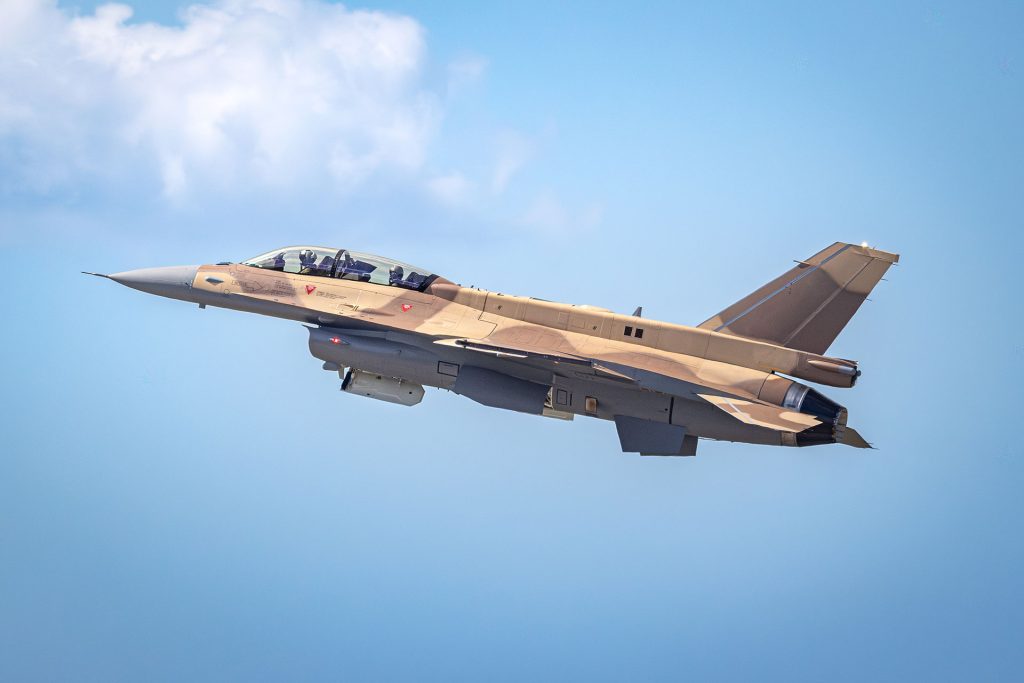
The Royal Moroccan Air Force (RMAF) has reached a significant milestone in its F-16 modernisation programme with the successful first flight of its first F-16 Block 72 aircraft.
The aircraft’s initial flight marks the beginning of a comprehensive flight-testing programme ahead of its eventual delivery to Morocco and represents an important step in the country’s efforts to strengthen its air combat and air defence capabilities.
The F-16 Block 72 is the latest and most advanced production configuration of the Fighting Falcon. The aircraft incorporates modernised avionics, advanced sensors, upgraded mission systems and improvements designed to enhance safety, reliability and operational effectiveness.
“This first flight reflects meaningful progress on Morocco’s F-16 Block 72 program and is a critical step in strengthening Morocco’s future airpower,” said Mike Shoemaker, vice president and general manager of Lockheed Martin’s Integrated Fighter Group.
“The F-16 remains a vital component of today’s and future air defence and we’re proud of the role it will continue to play in supporting Morocco’s sovereignty and contributing to regional stability for decades to come.”
Morocco’s relationship with Lockheed Martin stretches back more than five decades, beginning with the delivery of the country’s first C-130H Hercules aircraft in 1974.
Since then, the partnership has expanded considerably, with the Royal Moroccan Armed Forces now operating a range of Lockheed Martin platforms and systems. These include F-16 fighter aircraft, C-130 transport aircraft and advanced radar systems, while Morocco is also set to receive HIMARS long-range precision fires systems. The country also operates Black Hawk helicopters.
The introduction of the F-16 Block 72 will further develop Morocco’s existing F-16 capability while providing the RMAF with a more advanced platform equipped to meet evolving operational requirements.
Beyond the acquisition of aircraft and systems, Lockheed Martin is also supporting efforts to expand Morocco’s domestic aerospace and technical capabilities.
A key element of this strategy is the company’s partnership with Maintenance Aero Maroc and the development of a new Maintenance, Repair and Overhaul (MRO) facility at Benslimane.
The facility will cover more than 8,000 square metres and is being developed to support heavy maintenance and modernisation of C-130 Hercules aircraft. Future plans include expanding its capabilities to support additional platforms, including the F-16.
The development of the facility forms part of Morocco’s broader ambition to establish itself as a regional centre for aircraft maintenance, repair and overhaul. It is also expected to contribute to the development of local technical expertise and strengthen the country’s aerospace industrial base.
With the first F-16 Block 72 now progressing through flight testing, Morocco’s latest Fighting Falcon programme represents more than an expansion of its combat aircraft fleet. It also forms part of a wider effort to strengthen national airpower, develop local aerospace capabilities and establish Morocco as an increasingly important defence and aviation hub in the region.