

We chat to Sandile Ndlovu, Executive Director of the South African Aerospace and Defence Industry Association
South Africa’s aerospace, maritime and defence industry is a “sleeping giant”, according to Sandile Ndlovu, Executive Director of the South African Aerospace and Defence Industry Association and CEO of the South African Aerospace and Defence Industry Export Council. He believes the sector holds significant potential that is yet to be fully explored, particularly as global demand for South African-manufactured defence products continues to increase. “We are going into AAD in a very strong position in that there is quite an increased global demand for the products that we manufacture in South Africa,” he says. “We are expecting that at this AAD, some of those individuals and countries that are looking at strengthening their security will definitely be having serious conversations with our industry.”
However, the industry continues to face significant challenges. Sandile Ndlovu identifies two major obstacles: an inefficient regulatory environment and the lack of a coordinated political and diplomatic strategy to support South African defence companies internationally. The defence industry is heavily regulated for good reasons, he explains, but the implementation of those regulations in South Africa is not always efficient. This limits the ability of local companies to compete effectively in international markets. The second challenge is the absence of coordinated government support when South African companies enter global markets. “When our companies go out into the global market, they are effectively going alone without any recognised and coordinated government support,” he says.
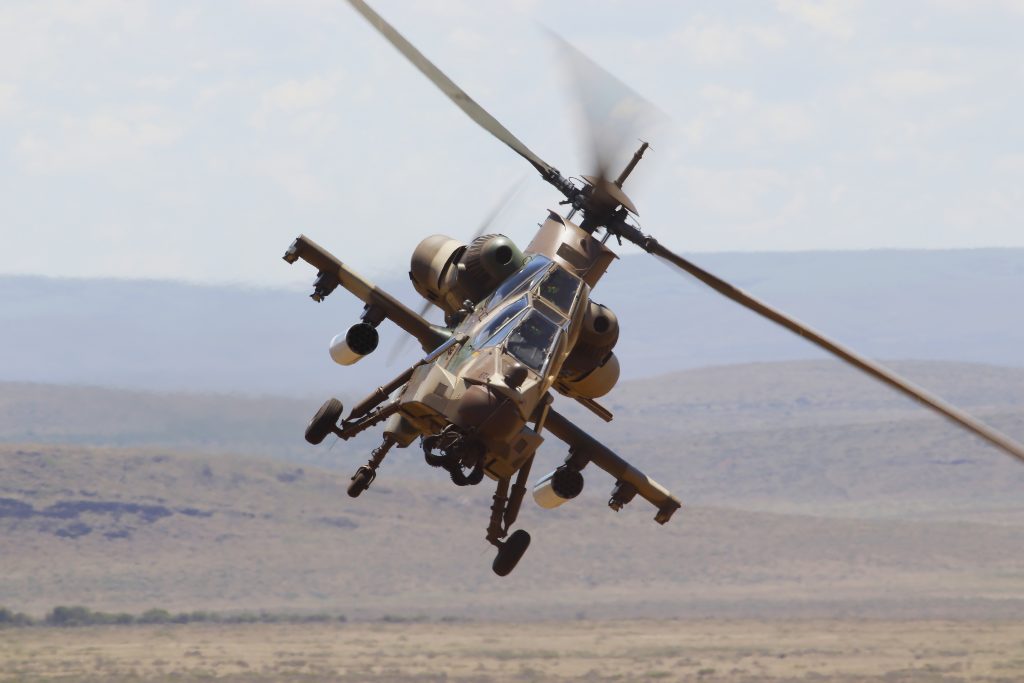
For South Africa’s defence industry, AAD 2026 has significance far beyond being another international exhibition. Sandile Ndlovu points out that defence industries are traditionally established primarily to serve their domestic clients. South Africa, however, faces constrained defence budgets, meaning the local industry has become heavily export-driven. “We export almost 80% of what we produce,” he says. “So if you are in an export-driven industry such as we are, it means AAD then takes a completely different significance.” He describes AAD as the main platform through which South African companies can showcase their full capabilities to international customers while also creating opportunities for those customers to interact with the South African government. As a regulated sector, government support and permission are essential to international defence trade. AAD therefore provides an important opportunity for South African companies to display their capabilities to international customers in one location.
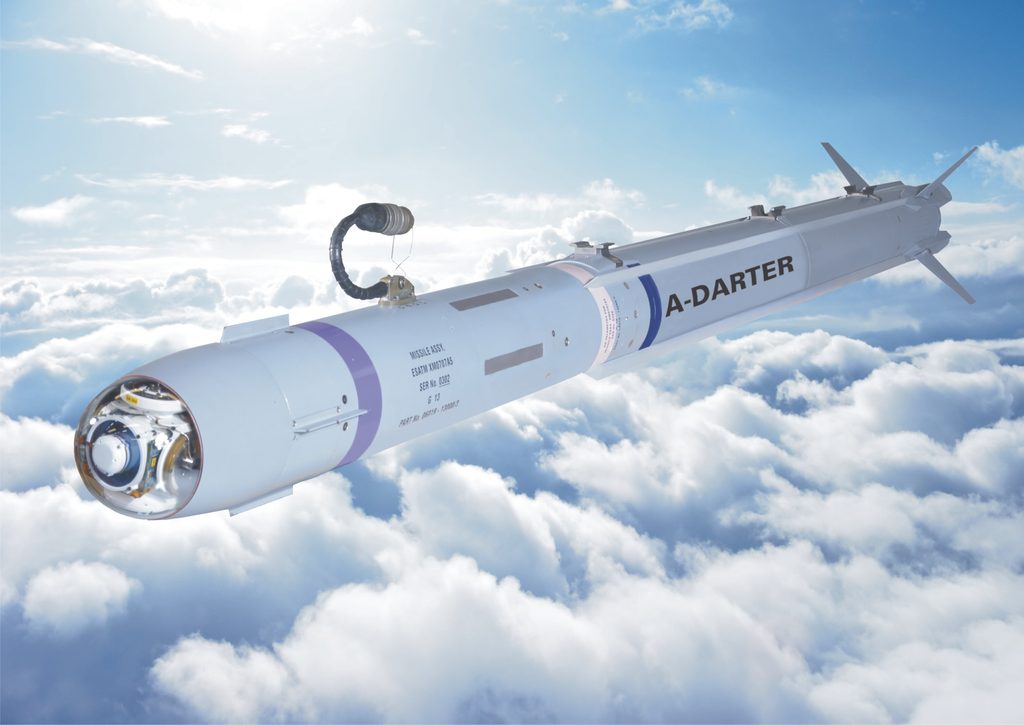
South Africa possesses a highly capable defence industry, but Sandile Ndlovu says there is an unusual situation in which local companies are producing capabilities that the country’s primary defence client is currently unable to procure because of budget constraints. The industry has supported calls for increased defence spending while also exploring alternative funding mechanisms for the South African National Defence Force. Public-private partnerships could provide one possible model, allowing both government and industry to address their respective challenges. For the SANDF, these include limited budgets and ageing equipment. For industry, the challenge is maintaining the capabilities, innovation and research and development necessary to remain globally competitive. “We have enough incentive to innovate and continue R&D efforts that will ensure that we remain highly competitive going into the future,” he says.
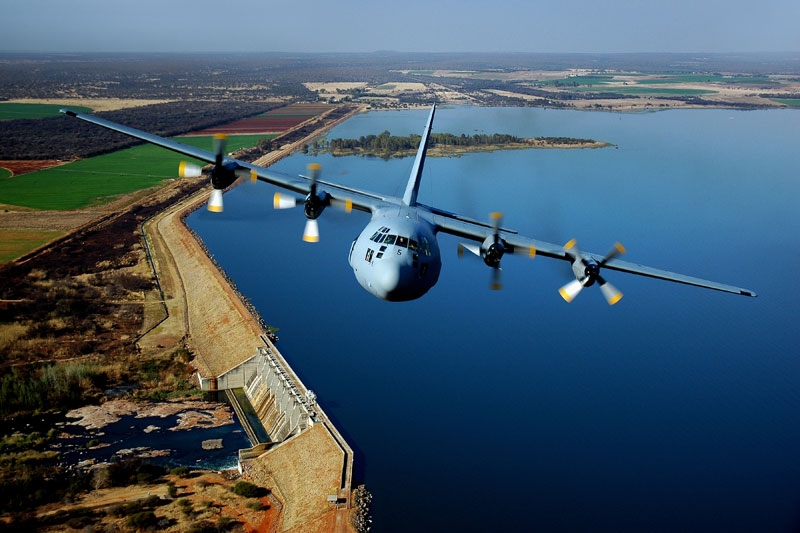
Sandile Ndlovu describes the relationship between government and the defence industry as essential, particularly because defence is one of the most heavily regulated sectors. Procurement decisions in the defence environment are influenced not only by economic and security considerations but also by political factors. Maintaining a close relationship with government is therefore critical for both domestic relevance and international market access. He also stresses the importance of long-term planning. Research and development cycles can take between five and 10 years, making it essential for industry to understand what its primary client will require in the future. “If you do not know what your defence force is going to require in the future, where do you spend your resources on R&D?” he asks. He believes the relationship between government and industry in South Africa is now reaching a level where it can benefit both sides. While a clear defence strategy is still developing, he says the intent is there. The Defence Industrial Dialogue convened by the Minister of Defence was an important step towards developing such a strategy, with resolutions providing building blocks towards the desired end state.
One of Sandile Ndlovu’s strongest messages is that government needs to understand the defence industry in its broader context. He believes the industry is too often viewed purely through its role in supporting the SANDF, when its technological contribution extends across the wider economy. “The technology that gets to be developed by this industry is technology that cuts across all economy sectors,” he says. He also highlights the importance of supporting small and medium-sized enterprises, particularly because the defence sector has high barriers to entry. Government needs to create mechanisms that give emerging companies a pathway into the industry without compromising the quality standards required by the sector. For Sandile Ndlovu, the defence industry is a strategic national asset because it develops technologies that can benefit almost every other economic sector. “If you are serious about moving into the fourth and the fifth industrial revolutions, this is the sector that would make it possible for the country to move into those spaces.”
The loss of specialised skills is another major concern, but Sandile Ndlovu argues that South Africa has not necessarily lost these skills permanently. Instead, many experienced engineers and specialists have been displaced overseas because of the lack of major strategic projects in South Africa. South African specialists are now working on projects in the UAE, Saudi Arabia, the United States, India and other countries. “They are willing to come back,” he says. “As soon as we can introduce projects for them to work on, they would definitely come back.” The challenge is compounded by the fact that many experienced professionals are approaching retirement while there is not yet a sufficient pipeline of young engineers entering the sector. One potential solution would be to bring experienced specialists back into South African projects while pairing them with younger engineers to facilitate the transfer of knowledge and skills.
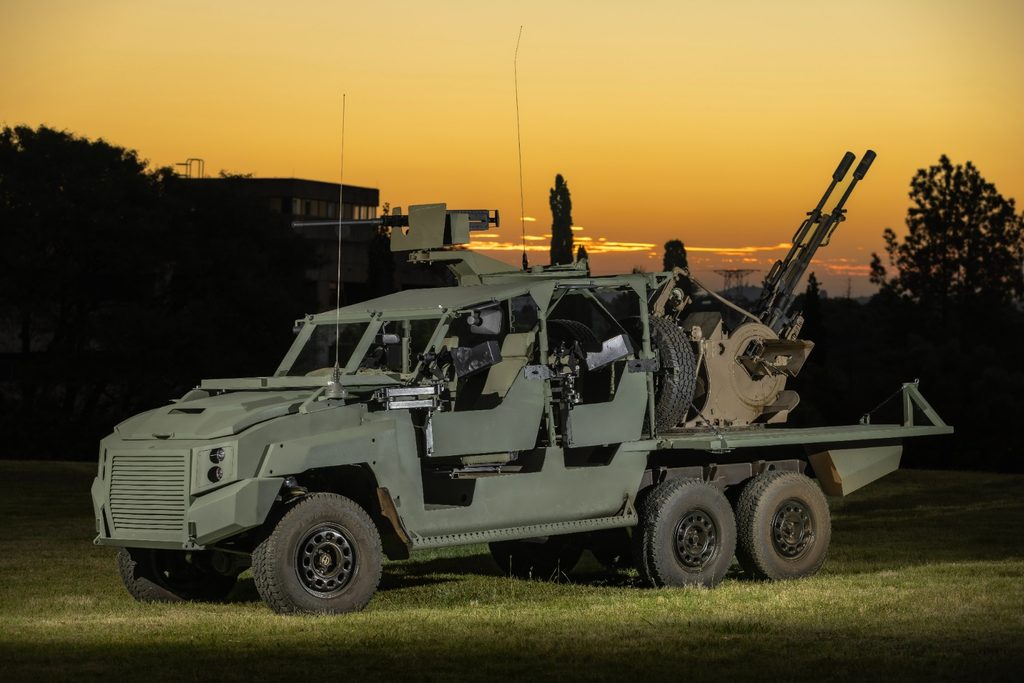
Sandile Ndlovu believes AAD can play an important role in attracting young South Africans into aerospace, defence and advanced engineering. The industry has a youth development programme that engages with schools and introduces learners to the sector. AAD then provides an opportunity for those learners to interact directly with the products and professionals they have been introduced to. He also believes career exhibitions, particularly those conducted by the SANDF in schools, need to become more frequent. The objective is to ensure that learners understand the career opportunities available within the sector before they enter university. “The solutions for future problems and challenges are sitting in their minds,” he says. “So we’ve got a responsibility to nurture those minds and bring them into the sector.”
South African defence companies have established a strong international reputation by consistently delivering high-quality products at competitive prices. With approximately 80% of production being exported, Sandile Ndlovu believes the sector has already demonstrated its ability to compete internationally. Looking ahead over the next one to five years, he identifies Europe and the Middle East as the two strongest opportunity regions, followed by Africa and Asia. Europe is becoming increasingly important because of rising defence demand, particularly amid the conflict in Ukraine and changes in the approach to NATO defence spending. The Middle East also remains an important market because security continues to be a major concern and countries in the region have significant financial capacity. Africa cannot be ignored, however. Sandile Ndlovu believes South Africa should dedicate significant effort to unlocking African markets while recognising that financial constraints remain a challenge across the continent. Asia is also generating considerable interest, with South African companies receiving inquiries from the region. At a country level, he identifies Saudi Arabia, Iraq and India as important markets, while Egypt and other African markets could also present opportunities.
International partnerships and joint ventures are essential to the future growth of South Africa’s defence industry. South Africa does not manufacture everything required by its own defence force. While the country has significant capabilities, there are areas where international partnerships can complement domestic expertise. “We need to partner with countries that can complement the products that we are already producing,” Sandile Ndlovu says. He points to opportunities presented through relationships with countries in the BRICS environment and other international partners. Joint ventures can also be a requirement when entering certain markets, where potential customers may expect South African companies to work alongside established local companies. For an export-driven industry, Sandile Ndlovu believes such partnerships are therefore a necessary part of remaining globally competitive.
While South African defence companies already have a strong international reputation, Sandile Ndlovu believes the industry needs to become more ambitious. He argues that companies sometimes overlook opportunities because they believe certain markets or contracts are simply too large for them. He believes South Africa’s defence industry has the potential to reach annual revenues of $10 billion. “We need to break through this period of us thinking we can’t compete at that level, because we can and we are already doing it,” he says. He also believes companies need to become more sophisticated in their international business development. Major defence markets include countries where Arabic, Mandarin, French and Spanish are widely spoken. Yet South African companies do not always have business development personnel who can communicate in these languages. Developing multilingual business development capabilities would, in his view, make it easier for South African companies to pursue opportunities in markets such as Egypt, West Africa, Angola and Mozambique.
Looking five to 10 years ahead, Sandile Ndlovu sees a South African defence industry that is increasingly integrated into the Southern African Development Community and sub-Saharan Africa. He believes South Africa’s greatest long-term strength will ultimately come from Africa itself. This means developing stronger relationships with countries including Lesotho, Mozambique, Zimbabwe, Zambia, Namibia and Botswana while integrating South African companies with like-minded businesses across the region.
Perhaps the biggest opportunity for South Africa lies beyond the traditional perception of the defence industry. Sandile Ndlovu argues that while countries such as Kenya and Nigeria have made significant progress in adopting technology, much of that technology is imported. South Africa has the opportunity to become a technology giver rather than simply a technology taker. “We’ve got the skills and those skills are in this industry,” he says. He believes the country has the ability to develop technologies domestically and then use them across the economy rather than relying entirely on imported solutions. “People, when they look at our industry, they think guns and bullets. But our biggest strength is nowhere near those kinds of things. We may have started, but we’ve evolved into being a technology-driven sector.”
For the South African aerospace, maritime and defence industry, success at AAD 2026 will ultimately be measured by commercial outcomes. Contracts signed, as well as discussions that develop into future contracts, will be an important measure of success. However, Sandile Ndlovu believes success also means demonstrating to international customers that South African companies remain dependable and trustworthy. Defence products can have lifespans of 25 years, meaning customers need confidence that the companies supplying those systems will continue to exist and support them for decades. AAD therefore provides an opportunity to demonstrate the strength and longevity of South Africa’s defence industrial base.
If Sandile Ndlovu could change one thing about the way South Africa approaches its defence industry, it would be to ensure that people understand the industry in its full context. The sector is often viewed primarily through its role in supporting the SANDF and police, but its contribution extends into economic development, technological advancement and skills creation. “We need people to start seeing our industry in its proper context,” he says. That broader understanding, he believes, would help government and the public recognise the strategic value of the industry.
For young South Africans, Sandile Ndlovu believes the future of the industry depends on attracting talented people from school through to university. “If we can’t get enough people interested in our sector, we would be dead in the water in the next 10 to 15 years,” he says. He believes the industry offers one of the most viable opportunities for young people who want to become active participants in tomorrow’s economy. His message to government is equally direct: many of South Africa’s challenges have potential solutions within the local defence industry. Government needs to identify those capabilities and apply them to wider national challenges. At the same time, the industry has a responsibility to demonstrate that it deserves continued support. “We need to meet our government halfway,” he says, highlighting the industry’s potential contribution to tackling unemployment and developing the skills required for the future. Finally, he calls for greater unity within the sector. The South African Aerospace and Defence Industry Association has represented the industry for 35 years, and Sandile Ndlovu believes companies should come together so that the sector can speak with one voice. The message is ultimately one of opportunity: South Africa already possesses the skills, technology and industrial capability needed to compete globally. The challenge now is to unlock that potential, strengthen collaboration between government and industry, develop the next generation of talent and position South Africa not only as a defence exporter, but as a technology leader.