By Jarryd Sinovich/Images: Jarryd Sinovich
The South African Air Force (SAAF) brought together personnel and aircraft from multiple establishments for the Dragon Peaks Park Mountain Deployment 2026, a combined training exercise aimed at enhancing operational readiness, strengthening inter-unit cooperation and developing specialised aviation skills in challenging mountainous terrain.
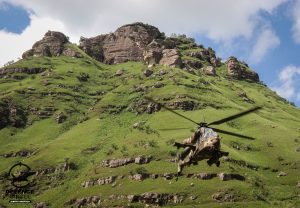
Located in the Drakensberg Mountains of KwaZulu-Natal, Dragon Peaks Park provides a demanding training environment for aircrew to practise the techniques required to operate safely and effectively in high-altitude and mountainous conditions. The deployment was conducted under the command of Lieutenant Colonel Zanele Vayeke and Lieutenant Colonel Michael Motsatse brought together a diverse range of aviation capabilities alongside specialised medical personnel from 7 Medical Battalion Group, including its Special Operations Medical Unit.

Participating units included 87 Helicopter Flying School and 16 Squadron from Air Force Base Bloemspruit, 19 Squadron from Air Force Base Hoedspruit, 15 Squadron Charlie Flight from Air Force Station Port Elizabeth and 2 Squadron from Air Force Base Makhado. Personnel from 7 Medical Battalion Group also participated, contributing specialised medical expertise to the deployment. The Mountain Club of South Africa (MCSA) provided its knowledge and experience in mountaineering and mountain search and rescue operations.

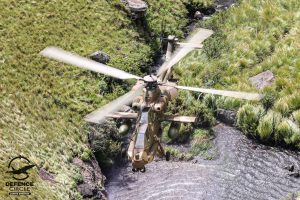
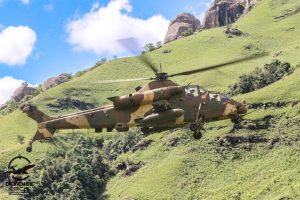
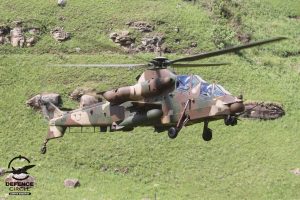
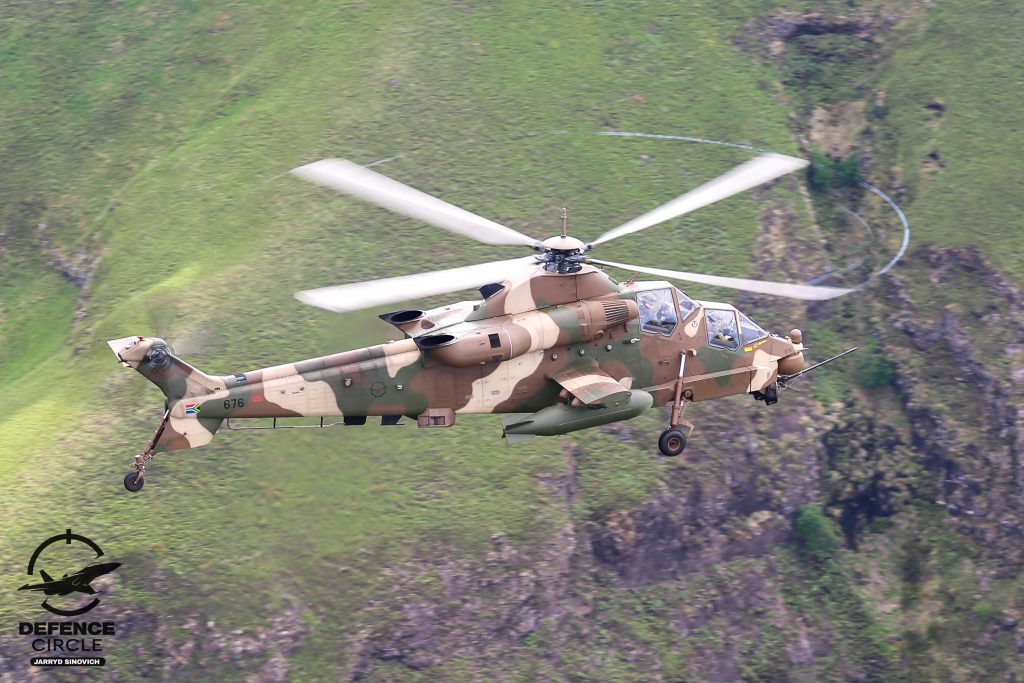
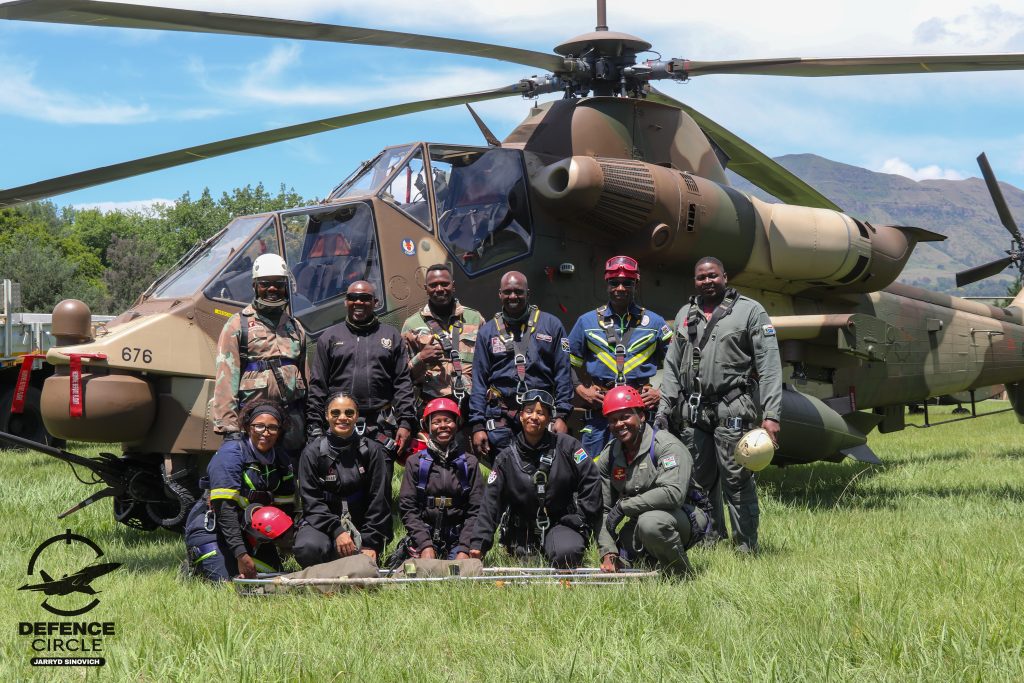
A major highlight of this year’s deployment was the return of the Rooivalk attack helicopter to the Dragon Peaks training environment after several years of absence. The participation of 16 Squadron added an important dimension to the exercise, demonstrating the value of integrating different aviation disciplines and operational capabilities in a demanding training environment.

Personnel from 2 Squadron also took part in the deployment, with aircrew conducting an overnight combat search and rescue (CSAR) exercise in the surrounding mountains. The simulated scenario involved a downed Gripen fighter aircraft, requiring personnel to practise the coordination and procedures associated with locating and recovering aircrew in difficult mountainous terrain.
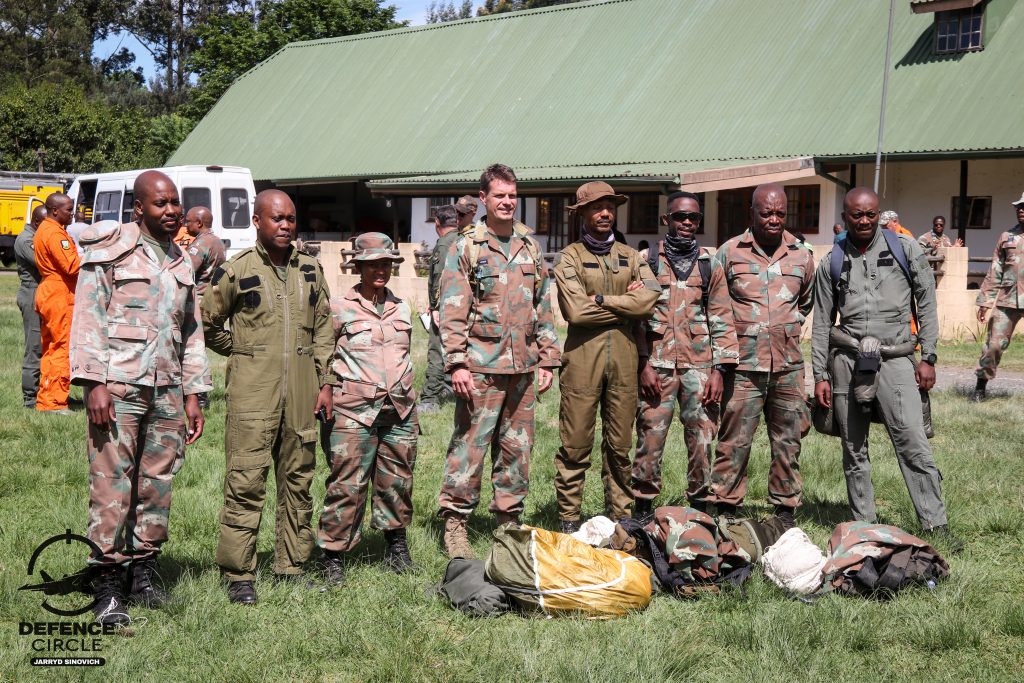
The overnight exercise provided an opportunity to test coordination between participating elements while reinforcing the importance of effective planning, situational awareness and teamwork during time-sensitive rescue operations. Such scenarios are particularly relevant in mountainous environments, where difficult terrain and limited access can complicate the recovery of personnel following an aircraft emergency.
The wider training programme covered a broad range of specialised aviation activities, including combat search and rescue, hoisting operations, cargo slinging, rappelling, fast roping and slope landings. Aircrew also conducted high-altitude mountain flying, Bambi bucket operations and battle and close-formation flying.
A key component of the deployment was the practical mountain training conducted in collaboration with members of the MCSA. The Oryx from 19 Squadron, A109 helicopters from 87 Helicopter Flying School and the BK117 from 15 Squadron Charlie Flight supported training activities involving MCSA members in the surrounding mountains. This collaboration enabled aviation personnel and experienced mountaineers to work together in a challenging environment, reinforcing the importance of coordination between aircrews and ground-based specialists during mountain operations.

Founded in Cape Town in 1891, the MCSA is South Africa’s oldest mountaineering club and has extensive experience in mountaineering, hiking and mountain safety. Its involvement brought valuable specialist knowledge to the deployment, highlighting the benefits of cooperation between military aviation units and civilian organisations with expertise in difficult terrain.
The deployment also incorporated specialised training for A109, BK117 and Oryx pilots and flight engineers, supported by practical exercises involving the Special Operations Medical Unit from 7 Medical Battalion Group. This integrated approach strengthened cooperation between aviation crews and medical specialists, particularly in scenarios where rapid response, casualty evacuation and coordinated medical support are essential.
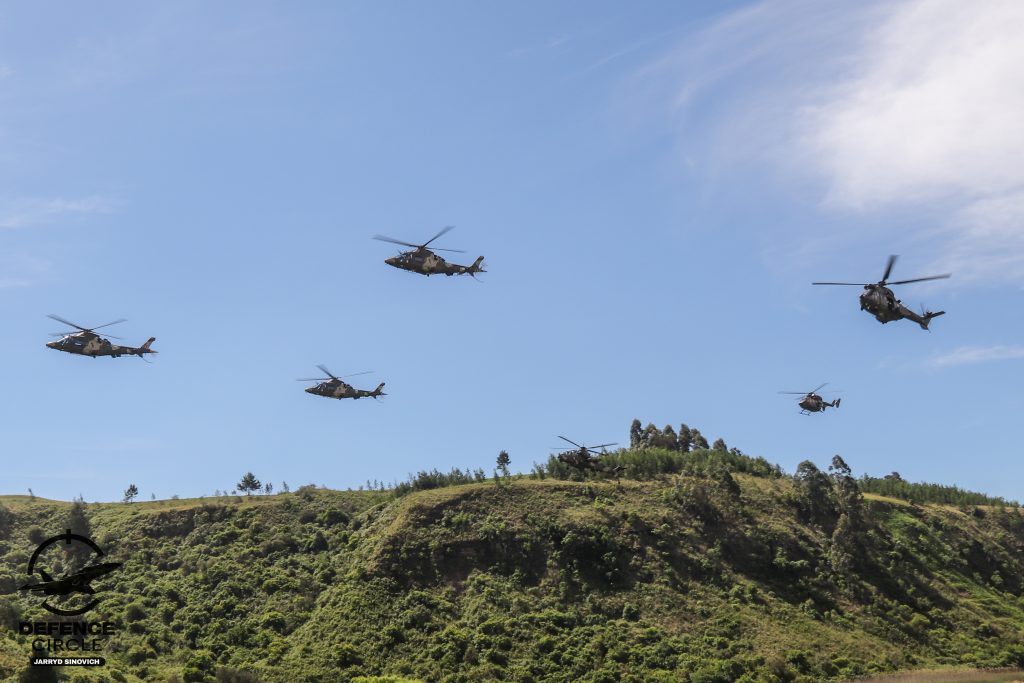
Saturday, 24 October, marked the final day of the deployment and was highlighted by a mass flypast over the Dragon Peaks area. The formation featured three Agusta A109 Light Utility Helicopters (LUHs) from 87 Helicopter Flying School, a BK117 from 15 Squadron Charlie Flight, an Oryx from 19 Squadron and a Rooivalk from 16 Squadron.
The flypast provided a fitting conclusion to the deployment, bringing together the participating aircraft in a display of the SAAF’s diverse rotary-wing capabilities. The Rooivalk’s presence was particularly significant, marking its welcome return to Dragon Peaks after years of absence from the training environment.
Beyond the flying programme, the deployment provided personnel from different squadrons, occupational groups and Air Force establishments with opportunities to exchange knowledge and gain a better understanding of one another’s operational responsibilities. The collaboration with the MCSA further demonstrated the value of combining military aviation capabilities with civilian mountain expertise. These interactions also helped build professional relationships, strengthen morale and foster camaraderie among participating members.
The Dragon Peaks Park Mountain Deployment 2026 demonstrated the importance of realistic, multi-unit training in preparing personnel for demanding operational environments. By combining different aircraft types, aviation specialities, medical capabilities and specialist mountain knowledge, the SAAF continues to develop the skills and cooperation required to support a broad range of missions.
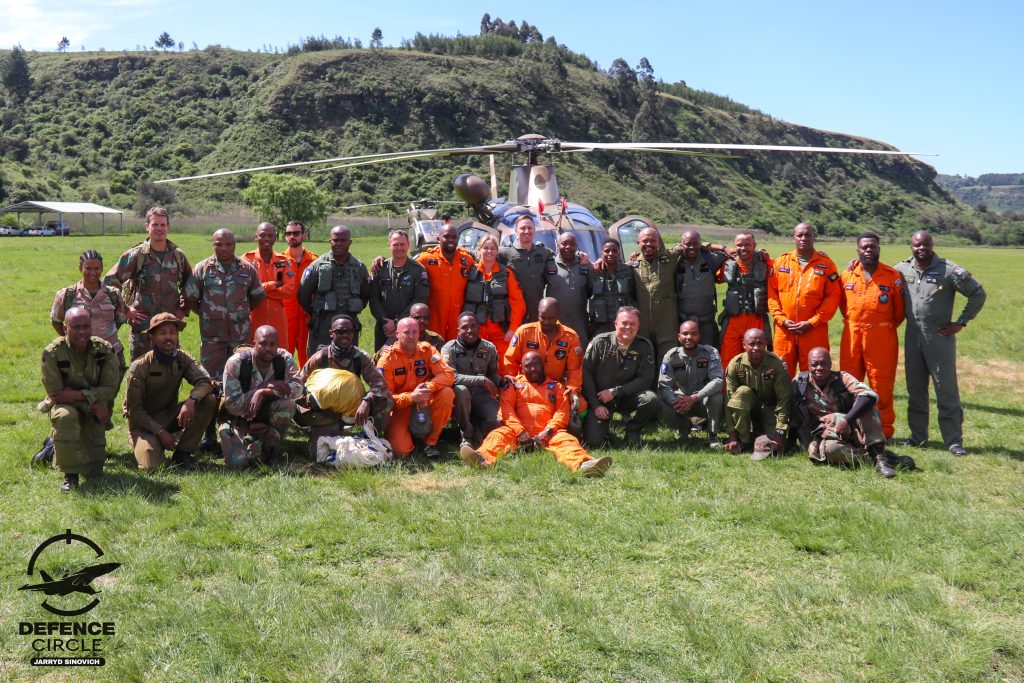
Against the challenging backdrop of the Drakensberg Mountains, the deployment highlighted the value of teamwork, shared expertise and a united approach to maintaining operational readiness across the South African Air Force.