
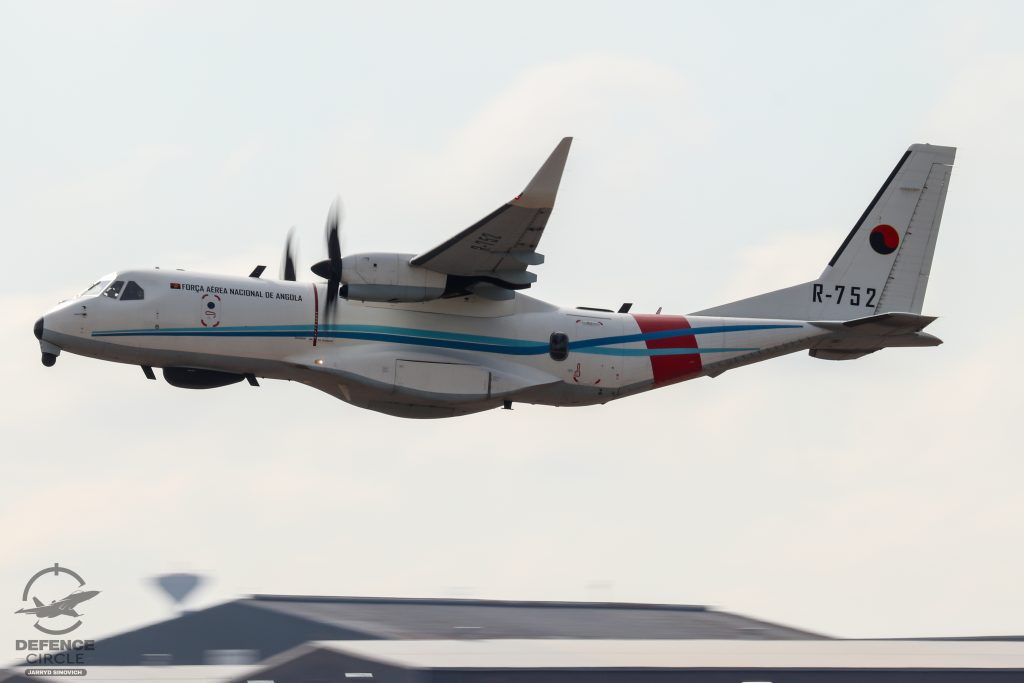
By Defence Circle/Image:Jarryd Sinovich
Airbus highlighted its 50-year presence on the African continent during its media briefing at the Africa Aerospace and Defence (AAD) 2026 exhibition, outlining its contribution to aviation development, local industry, technical training and aerospace support across the region.
Nam-Binh Hoang, Managing Director of Airbus Southern Africa, represented the company during the briefing, which focused on Airbus’s longstanding relationship with South Africa and its continued role in supporting the growth of the African aviation sector. The presentation highlighted the company’s commitment to sustainable aerospace, connecting people and providing capabilities that support the defence and protection of communities.
Airbus’s presence in Africa dates back to November 1976, when the first A300 aircraft for export was delivered to South African Airways. According to the presentation, this milestone marked the beginning of a relationship that has continued to expand over five decades, with Airbus now supporting commercial aviation operators and contributing to the development of regional aerospace capabilities.
Today, Airbus supports close to 40 airlines across Africa and provides assistance to more than 300 aircraft on the continent. Its activities extend beyond commercial aviation, encompassing helicopter support, technical services, engineering assistance and training programmes designed to strengthen operational capabilities.
South Africa remains a key part of the company’s regional operations. Airbus has maintained a presence in the country for more than 30 years, supporting helicopter operators and providing technical assistance throughout the region. The briefing highlighted that the company supports more than 300 helicopters across the broader region, with the figure approaching 500 when operations throughout sub-Saharan Africa are included.
Airbus’s local support extends beyond maintenance, with engineers providing assistance to operators to help sustain their operations. The company also conducts regular technician training at its facility in Midrand, helping develop the technical skills required to maintain and support aircraft throughout the region.
Another important development highlighted during the presentation was the introduction of a virtual reality pilot training simulator in Johannesburg. Described as the first of its kind on the African continent, the simulator represents an investment in modern training technologies and required adjustments to South African regulations to accommodate the system.
The initiative reflects the growing role of advanced simulation technologies in aviation training, allowing pilots to develop and refine their skills through modern training methods. Such capabilities also contribute to the development of local expertise and the continued advancement of the aviation sector.
Skills development and partnerships with South African institutions formed another central theme of the briefing. Airbus highlighted its longstanding relationship with Denel, which has continued for approximately three decades through a service agreement supporting maintenance activities involving dynamic components for the helicopter fleet.
As part of this partnership, Airbus hosted 60 learners from the Denel Training Academy at its facilities, providing them with an opportunity to explore the aviation industry and learn about potential technical career pathways. The visit was intended to expose young people to the opportunities available within aerospace and demonstrate how their training could translate into future employment.
The partnership also extends to the development of apprentices, with Airbus supporting selected learners from the Denel Training Academy as they progress towards becoming technicians and maintenance engineers. These initiatives contribute to the development of a skilled workforce capable of supporting South Africa’s aviation industry over the long term.
Local employment and procurement were also highlighted as important elements of Airbus’s contribution to South Africa. According to the presentation, more than 90 per cent of the company’s workforce in the country are South African nationals. Airbus also works with more than 100 African suppliers, creating opportunities for local businesses to participate in its supply chain.
The company’s procurement expenditure across its various divisions in South Africa averages approximately R1 billion, demonstrating the scale of its local industrial engagement. Through its supplier network and workforce, Airbus contributes to technical expertise, employment and business opportunities within the broader aerospace ecosystem.
Beyond commercial aviation and industrial development, Airbus also contributes to conservation initiatives in South Africa. The presentation highlighted support for activities involving veterinary teams at Kruger National Park, illustrating how aviation capabilities can assist wildlife protection, conservation operations and anti-poaching efforts.
The briefing also addressed Airbus’s recent developments in South Africa, including the establishment of a local customer service office. The office forms part of the company’s efforts to strengthen customer support and improve its ability to serve operators in the region.
As Airbus approaches the 50th anniversary of its first A300 export delivery to South African Airways, its presence in South Africa continues to span commercial aviation, helicopter support, technical training, industrial partnerships and conservation.
The company’s participation at AAD 2026 highlighted the importance of maintaining long-term partnerships while investing in local skills and technical capabilities. With its established workforce, supplier network and regional support infrastructure, Airbus continues to contribute to the development of South Africa’s aviation sector and the wider African aerospace industry.